doi: 10.3390/cells10082032 162 AmoozgarZKloepperJRenJTayREKazerSWKinerEet al
J Hepatol 72(1): 183-196
For SPE, 100 L of 3- tert -butylanisole (2 mM in absolute ethanol, 99.9 %, VWR, Darmstadt, Germany), 10 L of the internal standard 4-methoxy-2-methyl-2-butanethiol (11.2 M in ethanol), and 20 L of ETP (99 %, Merck, Darmstadt, Germany) were added to 50 mL of the sample

Research Applications KLOW may be useful in controlled research models focused on: Cellular repair signaling Tissue-remodeling pathway studies Extracellular matrix research Collagen and fibroblast activity models Angiogenesis and vascular-response research Epithelial integrity and barrier-function models Inflammatory-response pathway studies Immune signaling research Connective-tissue response models Regenerative biology research What Researchers May Document In controlled research environments, researchers may document broad patterns related to: Cellular migration markers Collagen and matrix-related observations Fibroblast activity models Angiogenic signaling notes Inflammatory-response pathway activity Epithelial barrier-response observations Tissue-remodeling research patterns Compound handling and reconstitution observations Protocol consistency Blend-response observations across multiple pathways The purpose of KLOW research is not to promise outcomes

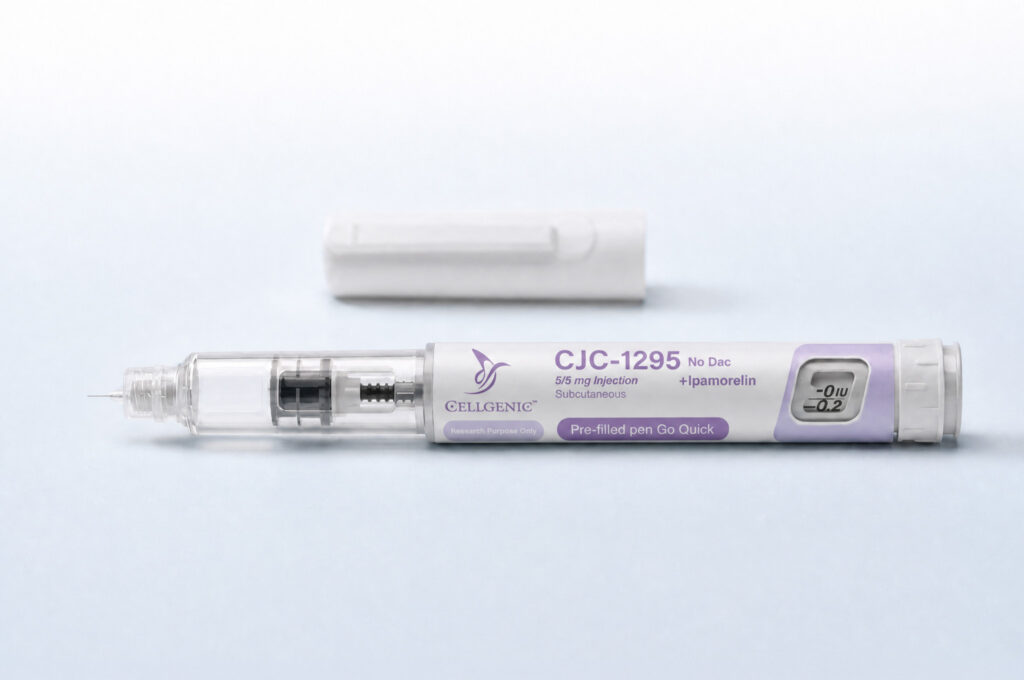
Related Research Complete Guide to CJC-1295 Storing and Handling CJC-1295 Research Peptides Quality Control and Purity Testing for CJC-1295 Sourcing High-Purity CJC-1295 for Research CJC-1295 DAC vs No DAC Mechanism of Action of CJC-1295 Frequently Asked Questions Can regular sterile water be used instead of bacteriostatic water for reconstitution